
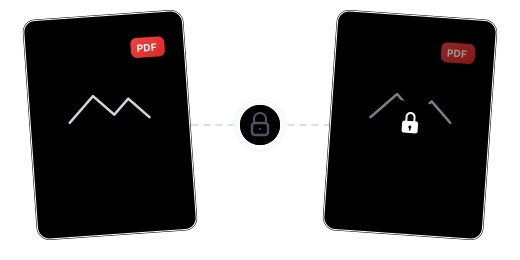
Beyond Encryption: Dual-Mode Comprehensive Protection
Password Encryption

Rasterization Content Protection

Flexible Dual-Mode Choice

Chain Multiple Operations

Secure Cloud Processing

No Installation Needed

Protect Your PDF in Just 3 Steps

Upload Your PDF
Click "Choose Files" or drag and drop your PDF into the secure workspace.

Choose Protection Mode
Select 'Password Encryption' and set a secure password, or select 'Content Protection' to rasterize pages.

Download Your Protected PDF
Processing completes in seconds — download your password-protected or content-protected PDF.
PDF Protection FAQ
What's the difference between password encryption and content protection?
Password encryption sets an open password — unauthorized users can't view the content. Content protection (rasterization) converts pages to images — text can't be selected or copied, but anyone can view the file.
What are the password requirements?
Passwords must be at least 8 characters and include at least one letter and one number for adequate security.
Will rasterization reduce document quality?
Rasterization uses high-resolution rendering — visual quality remains nearly identical to the original. However, since text becomes images, file size may increase.
What are the free plan limits?
Free users can process PDFs up to 100 MB. Upgrade to Pro for files up to 2 GB.
Is the protection process safe?
Your files are safe. All data is transferred via 256-bit encryption, processed on EU-based servers under GDPR compliance, and permanently deleted after processing.
Related Guides
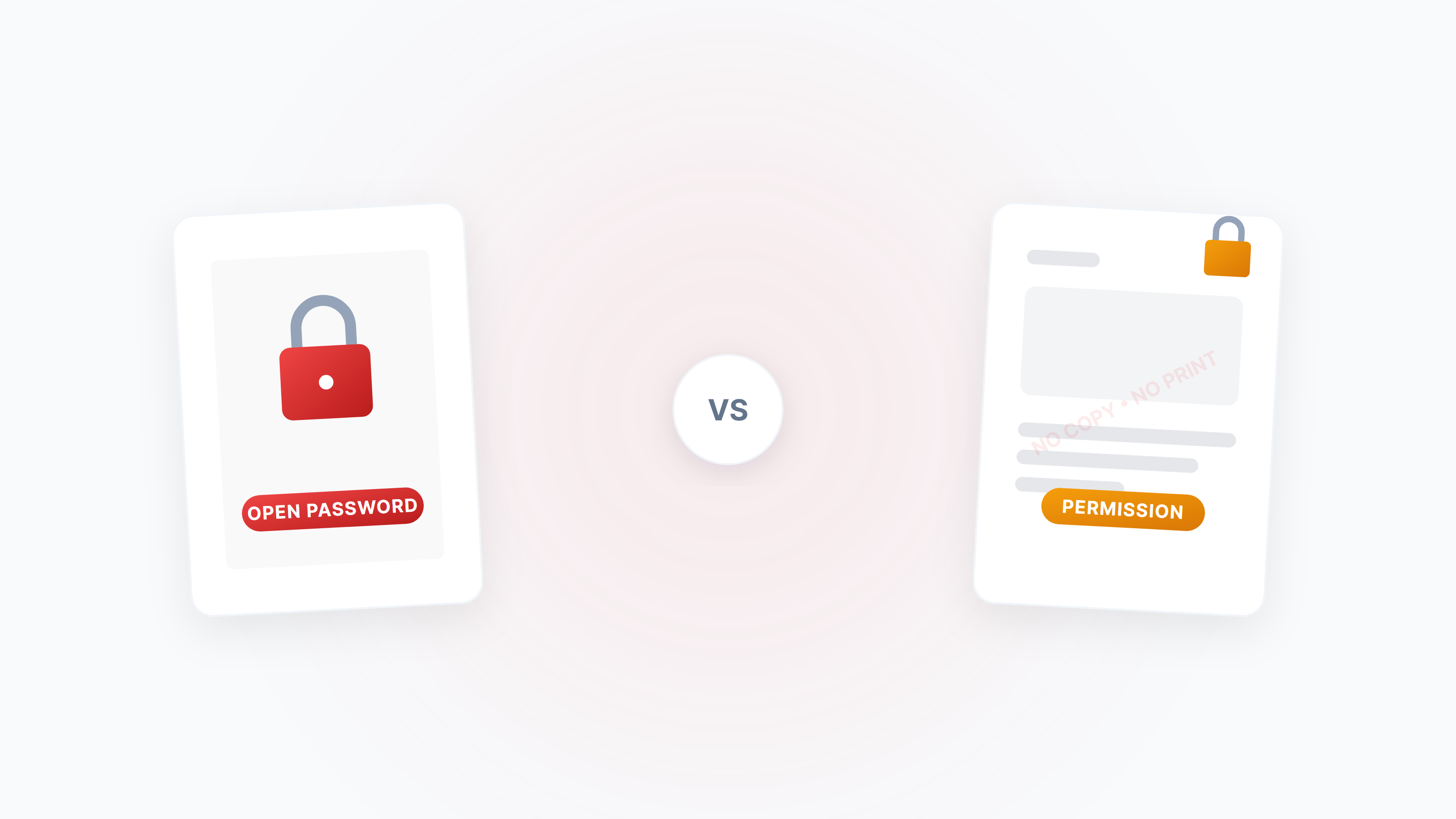
The Complete Guide to PDF Protection and Unlocking: Passwords, Permissions, and Security Strategies
A systematic guide to the two PDF password types (open password vs permission password), how to disable copying/printing/editing, and how to legally unlock restricted PDFs.
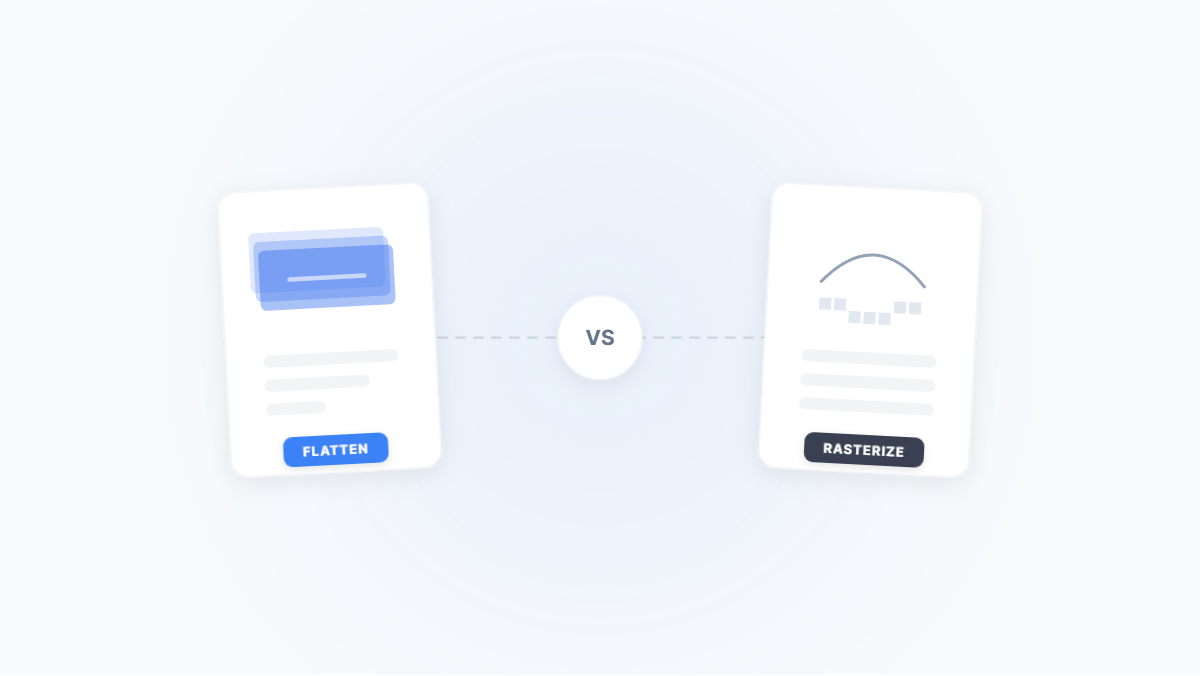
Flatten PDF vs. Rasterize PDF: Two Ways to Lock Down a Document — What's the Difference?
Both flattening and rasterizing can lock PDF content, but one preserves text while the other turns everything into an image. This article uses real-world scenarios to break down their differences, trade-offs, and when to use each.
PDF Password Types Explained: Open Password vs. Permission Password — Security Differences & Practical Guide
What's the difference between a PDF open password and a permission password? Open passwords use AES-256 to encrypt content and can't be bypassed; permission passwords are merely a 'gentleman's agreement' and can be removed instantly. This article breaks down the underlying mechanisms and best practices for both.